filed under: Album Review, Bonnie McKee, Diplo, Dr. Luke, Fiona Apple, Greg Kurstin, Marina And The Diamonds, Rick Nowels
♡♡♡
“‘Oh my God, you look just like Shakira! No, no–you’re Catherine Zeta!’ ‘Actually, my name’s Marina,’” she sang on “Hollywood,” the second single off of 2010′s The Family Jewels.
It’s been over two years since her debut, and Marina + The Diamonds is back with yet another identity crisis for her second go-around in the studio–and this time, she’s evoking a cold, cruel bitch named Electra Heart.

After serving up endlessly ferocious features on tracks like “Bottoms Up” by Trey Songz, Usher‘s “Lil Freak,” Jay Sean‘s “2012 (It Ain’t The End)” and her grand triumph, a spotlight stealing verse on Kanye West‘s star-studded “Monster,” Nicki Minaj‘s 2010 debut Pink Friday should have been a roaring proclamation that the new face of female rap had finally arrived.
Instead, the album turned out to be a plodding series of motivational cliches and lukewarm midtempos about overcoming obstacles, following your dreams and rising above. And that’s fair–after all, she managed to defy expectations, skyrocket to the top of the charts, reinvent the boundaries of female rap (and rap in general) and ultimately became the most important thing to happen to female rap since Lil’ Kim and Missy Elliott in the span of about two years.
Still, the album equivalent of one Taylor Swift surprise face after another about being on top wasn’t nearly as captivating as the fire she was spitting on everyone else’s songs. By the end, the album barely showcased why her star rose so quickly in the first place.
Two more years have passed, and Minaj is back for another solo round–Pink Friday: Roman Reloaded–and this time, she’s actually packing some heat.
filed under: Album Review, Angela McCluskey, Bitter:Sweet, Greg Laswell, Jonathan Mendelsohn, Morgan Page, Nadia Ali, Tegan And Sara, Tiesto

Music, as a wise woman once declared, makes the people come together.
As with his 2010 studio album Believe, Progressive House DJ/producer Morgan Page‘s third effort In The Air relies on vocal contributions by talented singers hailing from a multitude of genres. As he explained of his new album: “This record exists between the club and pop worlds with a little bit of indie thrown in there as well. I wanted to try some new flavors and attitudes, while keeping my sound intact.”
Accordingly, there’s a slew of new names to add to Morgan’s ever-growing list of collaborations, including Tegan & Sara (who aren’t actually strangers to the dance scene, having already guested on the brilliant “Feel It In My Bones” off of Tiesto‘s Kaleidoscope in 2009), as well as singer-songwriters like Greg Laswell, Shelley Harland and Coury Palermo.
“In The Air,” the album’s opening track, lead single and namesake, also happens to be Page’s first #1 on the Billboard Hot Dance Airplay Chart–and rightfully so, as it’s one of the best songs of 2011: Co-produced by BT, Sultan and Ned Shepard and featuring the vocals of frequent Telepopmusik collaborator Angela McCluskey, the crisp, chill-inducing powerhouse dance anthem was perfectly timed along with the changing season when it topped the chart in October: “I’m feeling a change in the air,” McCluskey hauntingly croons above the song’s pulsing beat.
The album’s second single on the other hand, “Body Work,” finds the EDM maestro working up a sweat with Canadian sister act Tegan & Sara. After the pounding club mix of the song was unleashed in late 2011, Page unveiled the album version back in February 2012; a slightly more pensive take on the track, underscoring the tender (if not slightly awkward) tone of the Canadian duo’s sexually-charged club thumper. “You do your body work/I feel my pulse working overtime/I get shy in these lights/I feel your body doing overtime,” the twins anxiously warble.
Beyond the album’s two massive singles, there’s plenty of highlights packed into the eclectic (yet cohesive) record, including “Where Did You Go?” with Jonathan Mendelsohn and Greg Laswell’s stunning album closer “Addicted,” which finds the singer achingly recounting the details of his troubled relationship atop a gorgeous, piano-tinged melody. “I might be addicted to how you always get the best of me,” Laswell sorrowfully croons above the soaring chorus.
Two of my favorite voices also make an appearance: There’s the tranced-out “Carry Me” starring omnipresent dance floor queen Nadia Ali and her distinctively melodic vocals, as well as “Gimme Plenty,” which features nu-jazz troupe Bitter:Sweet‘s Shana Halligan. (A very unexpected and happy surprise!) The songs sees the songstress singing lush Britney-like commands across the sultry, bouncing chorus: “Gimme more, gimme love, gimme plenty,” she coos.
In The Air is an absolute treat from start to finish, featuring solid production value that trumps Morgan’s previous record and plenty of soul-searching lyricism that go beyond the oft-basic themes of so many dance tunes on heavy rotation in the clubs. Every song’s a smash, filled with emotion and pulsating energy–the best qualities that EDM has to offer.
![]()
Check out a sample mega-mix of the album below…
filed under: Album Review, Benassi Bros, Madonna, Martin Solveig, The Demolition Crew, William Orbit

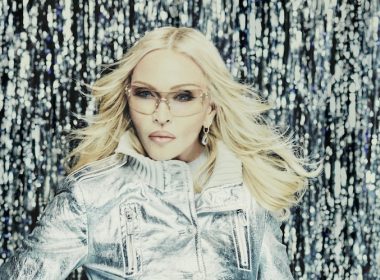
Madonna‘s ascent to the throne as the Queen of Pop (which began roughly 20 years ago give or take, depending on which articles you read), happened as a result of her ability to reinvent herself as an artist, challenging taboos regarding gender and sexuality via the appropriation of underground cultural phenomenons and entertaining the world over with her extraordinary talent as a live performer. She also knocked out a decent song or two.
The reality, though, is that her latest studio album MDNA–the twelfth of her career overall–is not about reinvention: It’s about reclamation.
After just under three years spent behind the director’s camera of W.E.–her take on the romance between Wallis Simpson and King Edward VIII–the Queen of Pop found herself going stir crazy, having spent months researching, writing and splicing pieces of her movie together in the editing room. (Or more likely, bossing around some poor schlub to carry out her demands.)
Coupled with a highly publicized divorce after 8 years from director Guy Ritchie in late 2008–a (somewhat) surprisingly still-raw subject that largely weaves itself throughout her latest record–Madonna’s current mantra du jour is best captured in her new album’s most defining lyric: “I need to dance.”

Everyone’s got something to say about Lana Del Rey.
In Late June, the cut-and-paste clip for the singer’s “Video Games”–then just a buzz track–dropped with a thud onto YouTube. Spliced between old movie sequences, paparazzi clips and fuzzy home videos, we watched as a husky-voiced, otherworldly chanteuse pouted and cooed a dreary, vintage-sounding ode to her beloved: “It’s you, it’s you/It’s all for you, everything I do,” she begs. The song’s haunting melody, coupled with Del Rey’s bombshell looks and curious mannerisms, drew adoration and anticipation from countless bloggers worldwide, including myself.
Only weeks after the clip premiered, the overnight Internet sensation came under fire, as dissenters were quick to point out what Google already knew for months: Lana Del Rey, born Lizzy Grant, was raised by her father, a real-estate entrepreneur, and her mother, an advertising account executive in Lake Placid. After a stalled launch two years prior, the singer had since been signed to Interscope in March of 2011, paired off with top UK writers and hip-hop producers, and thrust quietly into the world (again) as Lana Del Rey.
Critics scoffed at her stories in interviews of living in a trailer park (despite this fairly telling interview from back in 2008 in…a trailer park), as though an artist’s legitimacy is earned only by being born into hardship. Her image changed, too, including an unquestionably fuller set of lips (“They’re fake!”, they cried), as though the emotional value of a song is determined by a single Restylane injection.
In short, haters continued to hate: Internet campaigns–spearheaded by the ever-sarcastic Hipster Runoff–effectively began a Del Rey witch hunt, tearing apart her music lyric by lyric, her videos frame by frame, and over-analyzing every word she’s ever uttered in an interview to an obsessive degree.
It didn’t help that Del Rey’s star skyrocketed too quickly: When the singer took to the stage of Saturday Night Live in early January for a jittery performance of her double A-side debut, the world–largely unaware of her particular brand of deep-voiced, slow-spoken artistry to begin with–pounced: ABC news anchors, musicians and all began eagerly participating in the most bizarrely overwrought public skewering, labeling it “the worst performance in SNL history.” (It wasn’t.)
To this day, the persecution continues with sexist headlines (“Lana Del Rey shows off some upskirt on some magazine cover!”) and nasty blog comments, as Indie absolutists hungrily seek any opportunity to “out” Del Rey with a quivering, condemning point of the finger shouting “FRAUD!”
In reaction to a recent interview in which Del Rey discussed drinking underage to deal with her own troubles, Hipster Runoff posted a mocking meme of Del Rey, the words “My daddy only cared about hoarding dot-coms: Confessions of a Teen Drinker” written across the picture.
If there were ever a case to be made about cyber-bullying, Lana Del Rey’s e-burning at the stake would be the shining example.
filed under: Album Review, Cher Lloyd, Cheryl Cole, Jukebox, Keri Hilson, Max Martin, Mike Posner, Neneh Cherry, Priscilla Renea, RedOne, Rihanna, Shakespears Sister, Simon Cowell, Soulja Boy, The Runners, Toby Gad, Willow Smith
In September of 2010, the world (well, the UK) watched as a jittery Worcestershire-born girl named Cher Lloyd strolled across the stage–suited in a a fitted black jacket and shredded white jeans–to audition for the X Factor. After a brief grilling by the judges regarding her name and age (“You look more!” Louis Walsh exclaimed after learning she was only 16 years old), Lloyd announced she’d be performing (Keri Hilson‘s cover of) Soulja Boy‘s “Turn My Swag On.”
And then she opened her mouth to sing.
filed under: Album Review, Ben Moody, Clive Davis, Greg Kurstin, Imogen Heap, Kelly Clarkson, Max Martin, Toby Gad
Kelly Clarkson‘s come a long way in just under a decade.
After becoming the first (and let’s be real, still easily the best) winner of American Idol in 2002, the singer first made her official mark with 2003′s Thankful, a debut collection complete with safe-yet-amazing post-Idol balladry (“Anytime”), soulful R&B-pop offerings (“Just Missed The Train”) and slightly rambunctious, attitude heavy pop-rock anthems, including “Miss Independent” and “Low.”
The runaway success of the latter two singles quickly helped to sculpt the sound of what would become Clarkson’s grand opus in 2004: Breakaway, one of the most defining pop records of the ’00′s–a pristine collection of electrifying pop-rock anthems produced by Max Martin, Dr. Luke and Ben Moody including “Behind These Hazel Eyes” and “Since U Been Gone” that officially shed the singer’s Idol image and quickly made Clarkson’s name synonymous to any and all things angst-pop.
Following the record-breaking success of Breakaway came My December in 2007. Generally dubbed as Clarkson’s “rebel moment,” Kelly opted to breakaway (pun!) from the familiar pop mold of her past and go a slightly less radio-friendly route, penning tougher, darker, and more revealing rock tracks than ever before. The album’s development led to a very heated, very public head-to-head power struggle between Clarkson and Sony BMG label head Clive Davis, who very openly professed his lack of faith in Clarkson’s upcoming release. And while My December–which spawned “Never Again” and the devastating power ballad “Sober”–was by no means a failure (in fact, it was generally received more favorably by critics than Breakaway), its performance was ultimately underwhelming.
In 2009, Clarkson returned once more with her fourth studio album, All I Ever Wanted. It was another strong release (as with every Clarkson album) and a smash hit, although marked with a certain by-the-numbers familiarity, including safe, radio-friendly anthems (“My Life Would Suck Without You”) and Katy Perry album rejects (“I Do Not Hook Up”). The album’s own cover painted the album’s narrative perfectly, featuring an uncomfortable Clarkson forced to half-smile against a schlocky, candy-coated Photoshop background. It was, in effect, a quiet acknowledgement that Davis had won this round.
Two more years have passed since then, leading to Clarkson’s fifth studio release: Stronger–the most perfect representation of harmony achieved.
Combining the power-pop anthems and radio friendly accessibility of Breakaway with the darker confessional appeal of My December, Stronger plays like the perfect marriage between artistic intent and label demand. It’s an effortless combination–counterbalancing the threat of overindulgence by an artist gone unchecked and the “sell-out” sound of a label with too many hands in the cookie jar–resulting in one of the strongest, most triumphant and wholly satisfying records of the year.
filed under: Album Review, Cheryl Cole, Dimitri Tikovoi, Diplo, Dragonette, Girls Aloud, Liza Minnelli, Metronomy, Nadine Coyle, Nicola Roberts
Nicola Roberts is a different kind of pop star.
There’s just no getting around it, really: Ever since her name was called as one-fifth of the band that went on to become Girls Aloud during the finale of the 2002 reality series Pop Stars: The Rivals, the Lincolnshire-born redhead with porcelain skin stuck out like a sore thumb amongst the pristine pop quintet. There was something special about Nicola, something different–dare say “alternative” about the then 17-year-old songstress.
Roberts made her mark in the Aloud as the quiet, quirky vocalist responsible for some of the band’s most memorable moments–the opening seconds of “Untouchable,” the second verse of “Whole Lotta History,” the show-stopping bridge of “Call The Shots.” More often than not, it was Roberts’ shaky, vulnerable vocals that placed an ice-coated cherry on top of some of the Aloud’s finest work.
But being “different” can often be problematic, and for Nicola, induction into the Almighty Aloud was nearly a curse: From the get go, Roberts was relentlessly teased and bullied in the British tabloids for her appearance, as well as an apparent bad attitude: “Ginger.” “Pale.” “Ugly.” In 2003, Busted‘s Matt Willis pronounced her a “rude ginger bitch,” a nickname that the press fondly appropriated for years. And despite the best efforts made by her fellow bandmates to protect her against seeing the stories, Roberts was still well aware of the continuous public mockery, leading to several years of excessive drinking and an unhealthy obsession with tanning.
Lest anyone be confused and think she simply stood there and dealt with the criticism however, it’s simply not true: Nicola Roberts has always found ways to fight back.
During a performance at G-A-Y in London in 2003 for instance, the quiet crooner took a cheeky stab at Matt Willis’ attack by donning a black skirt with the words “RUDE GINGER BITCH…BOTHERD?!” painted on the back. Later on in her career, as Roberts slowly grew confident in her natural appearance, she would tackle her tanorexia head-on in an eye-opening BBC special, Nicola Roberts: The Truth About Tanning.
Now, with the release of debut record out on September 26, Cinderella’s Eyes, Roberts has gone one step further and turned the tables on her detractors completely with one loud, defiant rallying call: “TEAM GINGE.”